Vacuum Coating Reduces CO2 Emissions in Aerospace
 Aug 02, 2023|
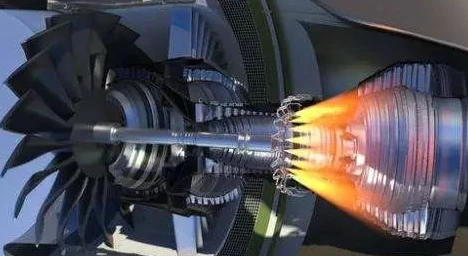
 The aviation engine manufacturing industry faces a number of challenges, including improving propulsion performance, safety and fuel efficiency, and controlling carbon dioxide emissions. One of the strategies to achieve the above goals is to protect the hot-end components so that they can operate at higher temperatures and output higher efficiency [24]. Another strategy is to improve the sealing and reduce the mass of the engine and the spacecraft as a whole.
The use of an abrasive coating improves the sealing performance of the fuel lines, and this coating surface can improve the service safety of the engine, reduce fuel consumption (by about 3%), and reduce CO2 emissions. The preparation of the thermal barrier coating on the hot end components (combustion chamber, turbine components) helps the engine to operate at higher temperatures without damaging the base material. For example, after the A320 series aircraft adopts thermal barrier coating, the cumulative fuel savings of 5×10⁶L, reducing the carbon dioxide emissions of 11600t.
IKS PVD company, decorative coating machine, tools coating machine, DLC coating machine, optical coating machine, PVD vacuum coating line, the turn-key project is available. Contact us now, E-mail: iks.pvd@foxmail.com